Introduction
Acne scars can linger long after breakouts have cleared, leaving behind uneven texture, shallow indentations, and a complexion that no longer feels smooth. If creams and serums have not delivered the results you hoped for, microneedling is one of the most popular professional options for softening these marks. It works with your skin’s own healing process to rebuild collagen and gradually refine the surface.
This guide explains how microneedling treats acne scars, what to expect before and after your session, and how to get the best possible outcome.
What Is Microneedling?
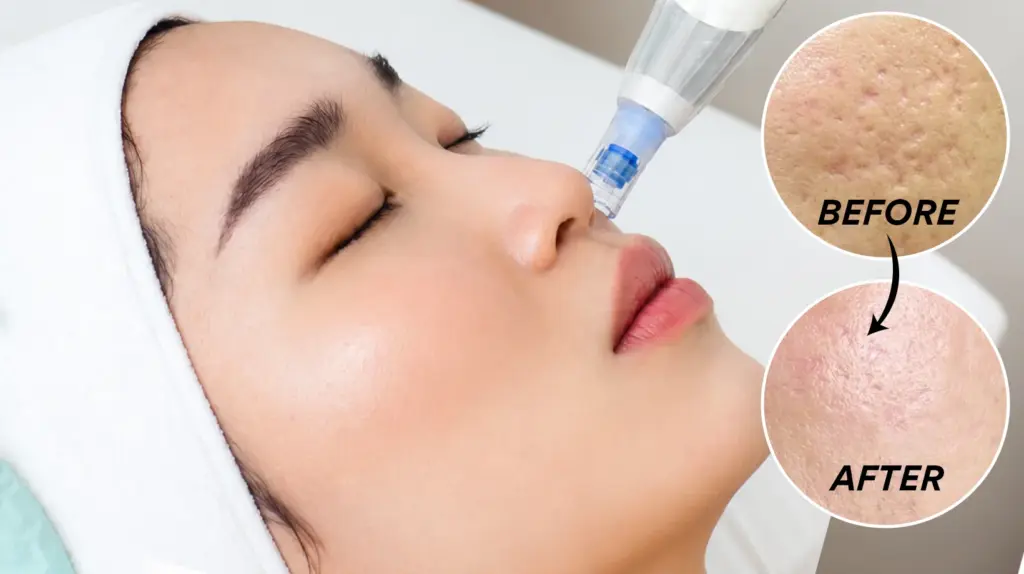
Microneedling is a minimally invasive treatment that uses very fine needles to create tiny, controlled micro-injuries in the skin. These micro-channels trigger your body’s natural wound-healing response, prompting it to produce fresh collagen and elastin. Over time, this new collagen fills in depressed scars and smooths the skin’s texture.
According to the American Academy of Dermatology, studies have found that microneedling can fade acne scars by 50% to 70%, with results appearing gradually as your skin rebuilds collagen.
Why Microneedling Works for Acne Scars?
Most acne scars are atrophic, meaning they sit below the surrounding skin because collagen was lost during healing. Microneedling is especially effective for these depressed scars because it directly stimulates new collagen where it is needed. Common scar types it can improve include:
- Rolling scars, which create a wave-like, uneven texture
- Boxcar scars, the wider scars with defined edges
- Ice pick scars, narrow and deep, which often soften with repeated sessions
It is worth noting that microneedling is not suited to raised or keloid scars, since those already have excess collagen. A proper assessment helps confirm whether your scarring is a good match for the treatment.
What You Should Expect Before Your Treatment
Good preparation makes the procedure smoother and lowers the chance of side effects. Before your microneedling session, you can typically expect to:
- Have a consultation so a practitioner can examine your scars and confirm suitability.
- Avoid sun exposure and tanning in the days beforehand, as this can irritate the skin.
- Pause certain products such as retinoids or exfoliating acids if advised.
- Arrive with clean skin, free of makeup, on the day of treatment.
- Stay hydrated, which can help reduce bruising and inflammation.
At MyClinic, our practitioner will usually apply a numbing cream beforehand to keep you comfortable during the procedure. We offer microneedling as part of our acne and scars treatments, so your plan can actually be personalised to your specific scarring. For complex or stubborn scarring, a dermatology assessment can ensure that the provided treatment matches with your skin type and condition.
What Happens During the Procedure?
On the day, the treatment area is cleansed and the numbing cream is left to take effect. A microneedling pen is then moved across the skin, creating the micro-channels that kick-start collagen renewal. A full-face session is relatively quick, often completed within a short appointment.
Most people describe the sensation as a light prickling or vibration rather than pain. Some clinics combine microneedling with serums or platelet-rich plasma to enhance results, and radiofrequency microneedling adds gentle heat to penetrate deeper and boost collagen further.
What to Expect After Microneedling?
Knowing what is normal afterward helps you recover with confidence. In the days following treatment, you can expect:
- Redness and warmth similar to a mild sunburn for one to three days
- Mild swelling or tightness, which usually settles quickly
- Slight flaking or dryness as the skin renews
- Minimal downtime, with many people returning to daily activities the next day
To support healing and protect your results, it helps to follow a gentle aftercare routine:
- Keep the skin clean and avoid heavy makeup for the first day or two
- Apply a soothing, lightweight moisturiser
- Use sunscreen daily, as fresh skin is more sensitive to the sun
- Avoid picking, scrubbing, or harsh actives until the skin has calmed
Before and After: The Results Timeline
Microneedling is not an instant fix. Because it relies on collagen rebuilding, the most noticeable changes develop over weeks and months. A typical timeline looks like this:
- Immediately after: Skin may look flushed and feel slightly tight.
- First few weeks: Redness fades and early smoothing becomes visible.
- Around three months: More significant scar improvement appears as collagen matures.
- Up to six months and beyond: Results continue to refine, especially across a series of sessions.
Most people need a series of three to six sessions, spaced several weeks apart, for moderate to deeper acne scars. Because microneedling boosts your skin’s own collagen, it pairs well with collagen stimulator treatments for those wanting to build firmness alongside scar reduction.
Frequently Asked Questions
1. Is microneedling painful?
Most people feel only a light prickling sensation, especially with numbing cream applied beforehand. Any discomfort is usually mild and short-lived.
2. How many sessions will I need for acne scars?
This depends on your scarring. Moderate scars often improve with three to four sessions, while deeper scars may need five or six, spaced several weeks apart.
3. How long is the downtime?
Downtime is minimal. Expect redness and mild swelling for one to three days, with many people resuming normal activities the following day.
4. When will I see results?
Some smoothing appears within a few weeks, but the fuller results develop around the three-month mark and can keep improving as collagen rebuilds.
5. Is microneedling safe for darker skin tones?
Microneedling is generally considered safe for all skin tones because it does not rely on heat or light in its traditional form. A consultation confirms the right approach for your skin.
Conclusion
Microneedling offers a proven and minimally invasive way to soften acne scars by working with your skin’s natural ability to produce collagen. While results take patience and usually a series of sessions, the gradual improvement in texture and tone can make a real difference for scarring that has not responded to skincare alone. Knowing what to expect before and after helps you approach the treatment with realistic, confident expectations.
If you are ready to address your acne scars, the experienced team at MyClinic can help you build a suitable tailored plan according to the condition of your skin. Contact us today to book a consultation and take the first step toward smoother, clearer skin.