Introduction
Stubborn dark spots, sun damage, and uneven skin tone are among the most common skin concerns that many people suffer from. Thanks to clinically proven innovations in aesthetic treatment, laser therapy and chemical peels have emerged as two of the most advanced professional options available to treat pigmentation. However, despite serving the same purpose, the two treatments work in very different ways.
If you are wondering whether a laser therapy for pigmentation or a peel will clear your skin faster, the answer depends exactly on the type of pigmentation, your skin tone, and how deep the discolouration sits. This guide will compare laser and chemical peels so you can understand which option may help your pigmentation fade faster.
Understanding Pigmentation First
Pigmentation happens when the skin produces excess melanin, the pigment that gives skin its colour. This shows up as dark spots, patches, or uneven tone. Common types include sun spots, post-acne marks, and hormone-driven melasma. According to Cleveland Clinic, professional options for fading pigmentation include both chemical peels and laser skin resurfacing, often alongside topical treatments and daily sun protection.
The key point is that not all pigmentation is the same. Surface-level discolouration responds differently from deeper, more stubborn pigment, which is why matching the treatment to your concern matters so much.
How Chemical Peels Work
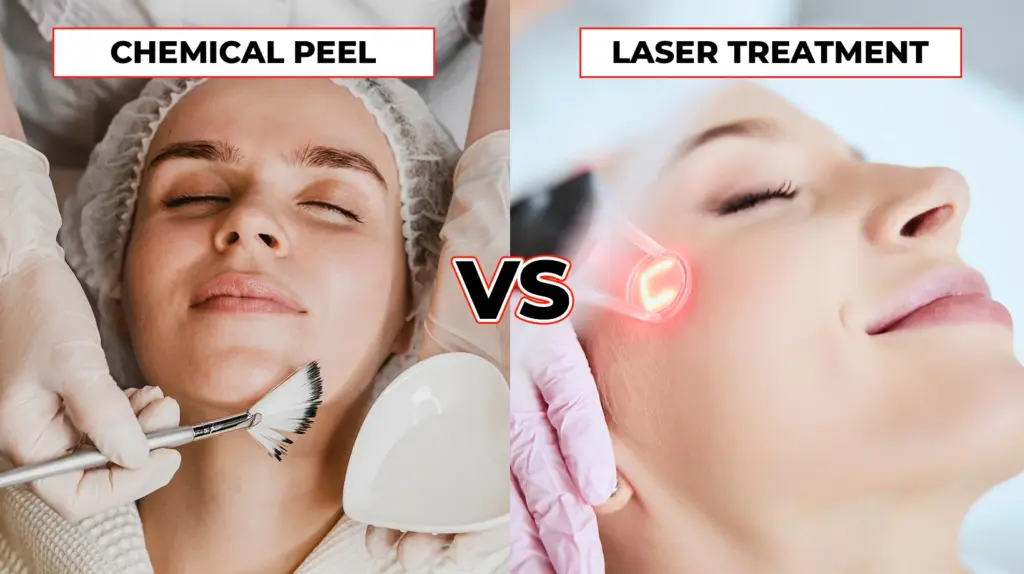
A chemical peel uses a solution of acids, such as glycolic, salicylic, or trichloroacetic acid, to exfoliate the outer layers of skin. As the treated skin sheds, fresh, more even-toned skin is revealed underneath. Peels also help slow excess melanin production.
Chemical peels tend to suit:
- Surface-level or widespread pigmentation
- Sun damage and uneven tone across larger areas
- Those wanting a gradual, controlled improvement
Most people need a series of peels, often several sessions spaced weeks apart, to see meaningful fading. Because peels work across a broad area, they are a good choice for diffuse discolouration rather than a single dark spot.
How Laser Treatment Works
A laser treatment for pigmentation uses focused light energy set to a specific wavelength that targets melanin. At MyClinic, our pigmentation and melasma treatments include options such as PicoSure Laser, CO2 Laser, Dual Yellow Laser, and Laser Toning, each suited to different pigmentation types and skin tones.
Laser treatment tends to suit:
- Stubborn, deeper, or well-defined pigmentation
- Targeted treatment of specific spots
- Those wanting faster results in fewer sessions
Many people see visible improvement in fewer sessions with a laser treatment for pigmentation than with peels, though the exact number depends on severity.
Laser vs Peel: Which Fades Pigmentation Faster?
When it comes to speed, here is how the two generally compare:
- Laser treatment often delivers faster results for deep or stubborn pigmentation, typically needing fewer sessions.
- Chemical peels work well for surface pigmentation but usually require more sessions for comparable fading.
- Both rely on consistent aftercare and sun protection to maintain results.
That said, faster is not always better. The safest, most effective option is the one matched to your specific pigmentation and skin type. For deeper or well-defined spots, a laser treatment for pigmentation often wins on speed. For broad surface discolouration, a peel may be the more practical choice.
Why Caring For Your Skin Tone Matters?
For those with deeper or Asian skin tones, treatment selection is especially important. Darker skin produces more melanin and is more prone to post-inflammatory hyperpigmentation if a treatment is too aggressive. This is why certain modern lasers, designed to break down pigment with minimal heat, are favoured for darker skin tones, while gentler peels are often chosen for sensitive skin.
Melasma in particular needs a cautious approach, as heat-generating treatments can sometimes worsen it. A careful assessment ensures the treatment suits your skin rather than triggering further pigmentation. For complex cases, a dermatology consultation helps match you to the safest plan.
Can You Combine Both?
In many cases, yes. Combining treatments under professional supervision can enhance results, particularly for mixed pigmentation concerns. A practitioner might pair a laser treatment for pigmentation with gentle peels or topical brightening agents for a more comprehensive result. MyClinic’s whitening and brightening treatments can complement targeted pigmentation care for an overall more even complexion.
How to Choose the Right Option
A few questions help guide the decision:
- Is your pigmentation surface-level or deep? Peels suit surface tone; lasers suit deeper spots.
- Is it a single spot or widespread? Lasers target precisely; peels cover larger areas.
- What is your skin tone? Darker skin needs carefully selected, gentler-energy options.
- How much downtime can you manage? Both vary depending on intensity.
The most reliable way to decide is a professional consultation that assesses your skin and recommends the right approach.
Frequently Asked Questions
1. Is laser treatment for pigmentation safe for darker skin?
Yes, when an appropriate laser is selected. Modern pigment lasers designed for minimal heat are safer for darker skin tones, but a professional assessment is essential.
2. How many sessions will I need?
This varies by pigmentation type and severity. Laser treatment often needs fewer sessions for deep spots, while peels usually require a series for surface pigmentation.
3. Does a chemical peel hurt?
Most peels cause a mild tingling or warmth. Deeper peels may feel more intense and involve more downtime, while light peels are very tolerable.
4. Which option has more downtime?
It depends on intensity. Light peels and non-ablative lasers have minimal downtime, while stronger peels or ablative lasers may need several days of recovery.
5. Will my pigmentation come back?
Pigmentation can return without proper aftercare, especially with ongoing sun exposure or hormonal triggers like melasma. Daily sunscreen is essential to maintain results.
Conclusion
Both laser and chemical peels can fade pigmentation effectively, but they suit different concerns. A laser treatment for pigmentation often works faster for deep, stubborn, or well-defined spots, while peels are well suited to surface-level, widespread discolouration. The right choice depends on your pigmentation type, skin tone, and goals, and on occasion a combination delivers the best result.
If you want to know which option will fade your pigmentation faster, the experienced team at MyClinic can help. Contact us today to book a consultation and take the first step toward clearer, more even-toned skin.