Introduction
As we age, our skin gradually loses the firmness and bounce it once had. Cheeks begin to droop, the jawline softens, and the neck can start to look loose or wrinkled. For many people, these changes are the first signs of ageing they want to address, but not everyone is ready for surgery. This is where a HIFU treatment offers an appealing middle ground option: a non-invasive way to lift and tighten skin without going under the knife.
In this guide, we will explore what HIFU is, how it works on sagging cheeks, jawline, and neck, and what you can expect from the treatment if you are considering it.
What Is HIFU?
HIFU stands for High-Intensity Focused Ultrasound. It is a non-surgical skin tightening technique that uses focused ultrasound energy to reach the deeper layers of the skin and stimulate the body’s natural collagen production. Because it targets these deep layers without damaging the surface, there is little to no downtime.
According to Cleveland Clinic, HIFU works by focusing many beams of ultrasound on a precise tissue area, raising its temperature to trigger a controlled response. In aesthetics, that response encourages fresh collagen growth, which is what firms and lifts the skin over the following weeks and months.
Why Skin Loses Its Firmness
Sagging happens because the structural support beneath your skin weakens over time. The main culprits are:
- A steady decline in collagen and elastin, the proteins that keep skin firm and springy
- The constant downward pull of gravity
- Loss of facial fat and volume, which leaves skin with less support
- Sun exposure and lifestyle factors that speed up skin ageing
These changes show up most clearly in three areas: the cheeks, the jawline, and the neck. A HIFU treatment is particularly well suited to these zones because it works on the same deep support layer that surgeons address during a facelift, only without any incisions.
How Can HIFU Treatment Lifts Sagging Skin?
A HIFU treatment delivers concentrated ultrasound energy to a layer of tissue beneath the skin known as the SMAS, the same layer manipulated in surgical lifts. The energy gently heats this tissue, causing it to contract immediately while also kick-starting a longer process of collagen renewal.
There is a subtle tightening you may notice early on, followed by a more gradual lifting effect as new collagen builds over two to three months. Because the surface of the skin is left untouched, you can usually return to your normal routine straight away.
How HIFU Targets Cheeks, Jawline and Neck
1. Sagging Cheeks
When cheeks lose volume and begin to descend, the face can look tired and drawn. A HIFU treatment helps lift and firm the mid-face, restoring a more elevated, youthful contour. For people who have also lost facial volume, HIFU is often combined with other treatments such as dermal fillers to replace lost structure while the ultrasound handles the lifting.
2. Loss of Jawline Definition
A sharp jawline is a hallmark of youthful skin. As laxity sets in, the once-defined jaw can blur into early jowls. HIFU energy tightens the skin along the lower face, helping to redefine the jaw and smooth the transition between the chin and neck.
3. Neck and Under-Chin Laxity
The neck is one of the first areas to reveal ageing and one of the trickiest to treat with creams alone. HIFU reaches the deeper layers here to firm loose skin, soften banding, and improve the look of a sagging under-chin. A study by Alam and colleagues, published in the Journal of the American Academy of Dermatology, found that ultrasound-based tightening produced visible lifting of facial and neck skin.
What Can You Expect From a HIFU Treatment?
Knowing the process ahead of time makes the experience far more comfortable. A typical journey would begin with:
- Consultation: A practitioner assesses your skin laxity and discusses your goals to confirm whether HIFU is suitable.
- Preparation: The treatment area is cleansed and a gel is applied.
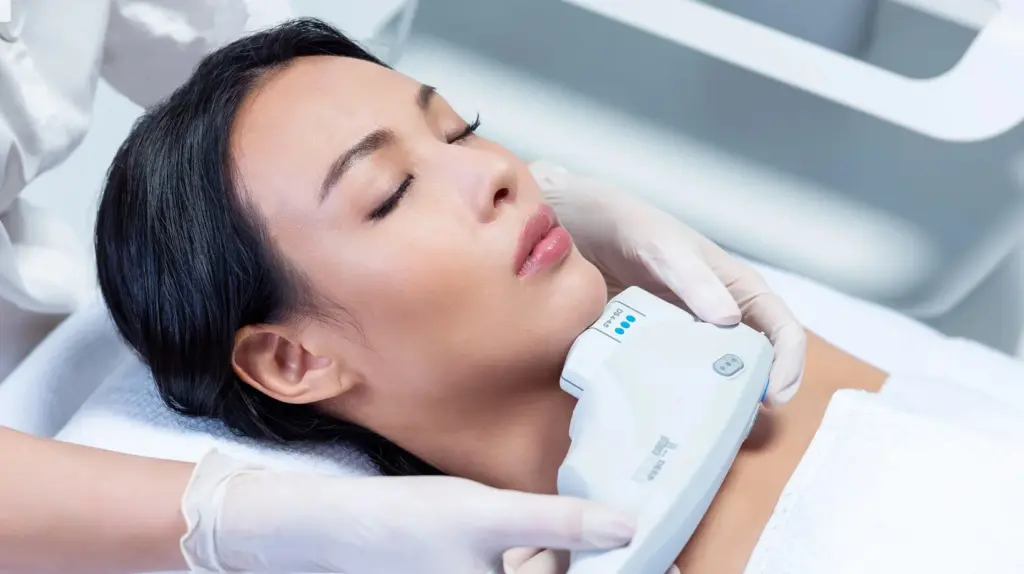
- The procedure: The HIFU device is moved across the target zones, delivering ultrasound energy. Most people feel a warm, tingling sensation during this stage.
- Immediately after: You may notice mild redness or slight tenderness, which usually fades within hours.
- Results over time: Initial firmness can appear early, with the full lifting effect developing over two to three months as collagen rebuilds.
A single session often produces visible improvement, though some people benefit from a tailored plan depending on their starting point. At MyClinic, we offer a full range of face lifting treatments, so you can see how HIFU fits alongside our other options.
Benefits of Choosing HIFU
A HIFU treatment appeals to many people because it offers:
- A non-surgical alternative to a facelift, with no cuts or stitches
- Little to no downtime, so you can carry on with your day
- Natural-looking, gradual results rather than a sudden change
- Stimulation of your own collagen for longer-term firmness
- Versatility across the cheeks, jawline, neck, and other areas
Because HIFU boosts your body’s own collagen, it pairs well with other collagen stimulator treatments for people who want to build firmness from multiple angles.
Is HIFU Right for You?
HIFU tends to suit people with mild to moderate skin laxity who want noticeable lifting without surgery. It is a popular choice for those in their thirties through fifties who are starting to see early sagging. Severe sagging may respond better to surgical options, which is why a professional consultation matters. The best way to know if a HIFU treatment fits your needs is to have your skin assessed by a qualified practitioner.
Frequently Asked Questions
1. Is a HIFU treatment painful?
Most people describe it as a warm, tingling, or prickling sensation rather than pain. Comfort levels vary, and your practitioner can adjust the settings to keep the experience tolerable.
2. How long do the results last?
Results typically last around one to two years, depending on your age, skin condition, and lifestyle. Because skin continues to age naturally, occasional maintenance sessions help preserve the effect.
3. When will I see results?
Some firmness may be visible soon after treatment, but the main lifting effect develops gradually over two to three months as new collagen forms.
4. Is there any downtime?
HIFU is non-invasive, so downtime is minimal. You may have slight redness or tenderness for a short while, but most people return to normal activities the same day.
5. Can HIFU replace a surgical facelift?
HIFU is an excellent non-surgical option for mild to moderate sagging, but it is not a like-for-like replacement for surgery in cases of severe laxity. A consultation will clarify which approach suits you.
Conclusion
Sagging cheeks, a softening jawline and neckline are natural parts of ageing, but they do not have to be permanent. A HIFU treatment offers a safe, non-invasive way to lift and firm these areas by harnessing your skin’s own collagen, with little disruption to your daily life.
If you would like to find out whether HIFU is right for your skin, the experienced team at MyClinic is here to help. Contact us today to book a consultation and take the first step toward a firmer and more lifted appearance.