Introduction
If you have spent months battling dark spots and uneven tone with creams that barely make a dent, you have probably come across pico laser as a professional solution. It is one of the most talked-about treatments for pigmentation, promising faster, more effective results than topical products. But does it live up to the hype? The honest answer is yes for many concerns, though with some important nuances worth understanding.
This guide explains how pico laser works for skin pigmentation, what the evidence says, and how to know whether it is right for you.
How MyClinic Uses Pico Laser to Treat Skin Pigmentation
Getting results from pigmentation treatment depends on matching the right technology to the right type of pigmentation and skin tone. MyClinic offers pico laser as part of its pigmentation and melasma treatment programme, with every session preceded by a skin assessment to calibrate the settings safely and effectively for your specific concern.
Our practitioners are experienced in treating a range of pigmentation types across different skin tones, from sun spots and post-acne marks to stubborn melasma. If you are also working on lifestyle habits that could be making your pigmentation worse, our guide on 5 habits that worsen skin pigmentation is a useful read alongside your treatment plan.
What Is Pico Laser?
Pico laser, short for Picosecond laser, delivers ultra-short pulses of energy measured in picoseconds, trillionths of a second. Unlike older lasers that rely heavily on heat, pico laser uses a photomechanical effect to shatter pigment into tiny particles that your body then naturally clears away.
This speed and precision are what set it apart. Because it targets pigment with minimal heat, it tends to be gentler on the surrounding skin, making it a popular choice for those prone to post-laser marks. MyClinic uses advanced pico technology within its pigmentation and melasma treatments to address a range of concerns.
How Pico Laser Works on Skin Pigmentation
Skin pigmentation happens when the skin produces excess melanin, creating dark spots, patches, or uneven tone. Pico laser works by directing rapid pulses of light energy at these melanin deposits. The energy fragments the pigment into ultra-fine particles, which the body’s natural processes then gradually remove over the following weeks.
The key advantage over creams is depth. Topical products work on the surface, while much pigmentation sits deeper in the skin. Pico laser reaches those deeper layers, breaking down pigment that surface treatments simply cannot touch. Because the pulses are so fast, they fragment the melanin into much finer particles than older lasers manage, which means the body can clear them more efficiently and with less risk of irritation. As a bonus, the same process also stimulates collagen, helping to improve overall skin texture and tone at the same time.
Does the Evidence Support It?
This is where the “does it really work” question gets answered. Pico laser has solid clinical backing for several types of pigmentation. According to a clinical study published on PubMed, pico laser can meaningfully reduce the severity of melasma, one of the most persistent and difficult types of pigmentation to treat, with good results reported across different skin tones.
For sun spots, freckles, and post-acne dark marks, results are often even more reliable, since these respond particularly well to pico laser’s precise targeting. Visible improvement can often appear after just one session for milder concerns, with a series of sessions recommended for deeper or more widespread pigmentation.
What Types of Pigmentation Does It Help?
Pico laser is versatile, which is part of why it has become so popular. It is commonly used to treat:
- Sun spots and age spots from cumulative UV exposure
- Freckles and other surface pigmentation
- Post-inflammatory hyperpigmentation left behind by acne
- Melasma, particularly more superficial cases
- Dull, uneven tone alongside general skin rejuvenation
For lingering dark marks and uneven tone, dedicated whitening and brightening treatments can complement pico laser for a more luminous complexion overall.
The Honest Caveats
While pico laser genuinely works, it is not a magic wand, and being realistic matters. Melasma is hormone-driven and prone to returning, so even after successful treatment, it usually needs ongoing management rather than a permanent cure. Without consistent sun protection, pigment can come back, especially in melasma-prone skin, and a single day of unprotected sun can reactivate pigment you have worked hard to fade.
This is why pico laser delivers the best results as part of a wider plan that includes daily sun protection and maintenance sessions where needed. Deeper pigmentation rarely clears in one visit, so patience across a course of sessions is part of the process, and pico laser works best when paired with realistic expectations and good aftercare.
Why Skin Tone Matters
For those with deeper or Asian skin tones, treatment selection is especially important. Darker skin is more prone to post-inflammatory hyperpigmentation if a treatment is too aggressive. Pico laser’s lower-heat approach makes it a comparatively safer option for darker skin tones, but settings still need to be carefully matched to your skin.
A professional assessment is essential to ensure the treatment suits your skin rather than risking further pigmentation, and for complex or persistent cases, a dermatology consultation helps match you to the safest, most effective plan.
What to Expect From Treatment
Knowing the process helps set realistic expectations. A typical pico laser session follows these steps:
- Consultation: A practitioner assesses your pigmentation type and skin tone.
- Preparation: The skin is cleansed, and numbing cream may be applied.
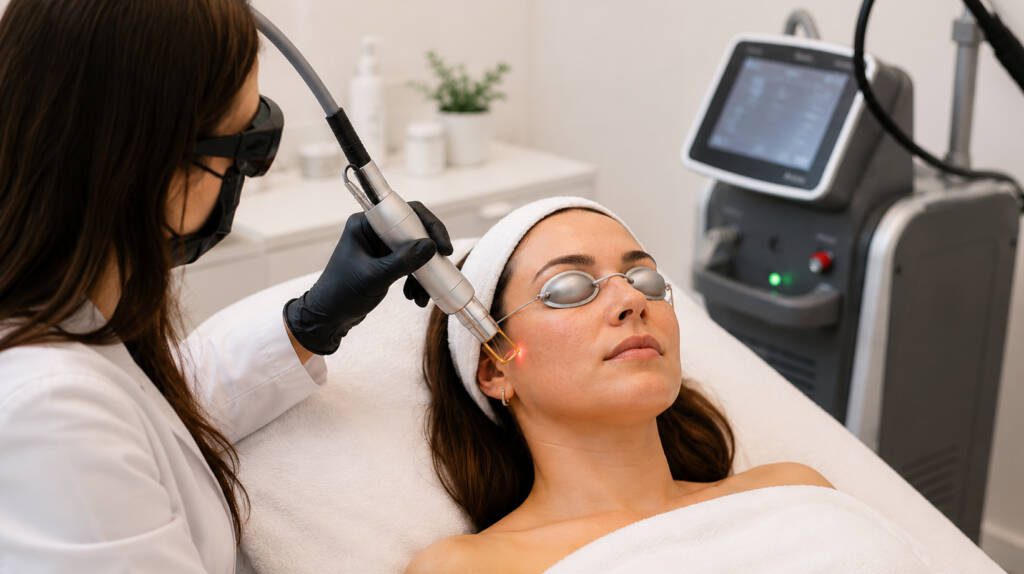
- The procedure: Rapid laser pulses are delivered across the target areas.
- Afterwards: Mild redness or warmth may appear briefly, with little downtime.
- Results over time: Pigment gradually fades as the body clears the fragments.
Most people describe the sensation as a light snapping feeling, generally tolerable, especially with numbing cream applied beforehand.
Frequently Asked Questions
1. Is pico laser safe for darker skin tones?
Yes, when settings are properly selected. Its lower-heat approach makes it comparatively safer for darker skin, but a professional assessment is essential.
2. How many sessions will I need?
This varies by pigmentation type and depth. Milder spots may improve in one session, while melasma and deeper pigmentation usually need a series.
3. Does pico laser hurt?
Most people describe a light snapping sensation. Numbing cream is often applied beforehand to keep the experience comfortable.
4. Will my pigmentation come back after treatment?
It can, especially with melasma or ongoing sun exposure. Daily sunscreen and maintenance sessions are key to keeping results lasting.
5. Is pico laser better than creams for pigmentation?
For deeper or stubborn pigmentation, pico laser is generally far more effective than creams, since it reaches pigment topical products cannot.
Conclusion
So, does pico laser really work for skin pigmentation? For many people, the answer is a confident yes. It effectively fades sun spots, freckles, post-acne marks, and even stubborn melasma, with clinical evidence to back it up. The key caveats are that melasma needs ongoing management, and consistent sun protection is essential to keep results lasting. Matched to your skin tone and concern by a professional, pico laser is one of the most effective options for clearer, more even-toned skin.
If you are considering pico laser for your skin pigmentation, the experienced team at MyClinic is ready to help. Contact MyClinic to book a consultation and take the first step toward a clearer complexion.