Introduction
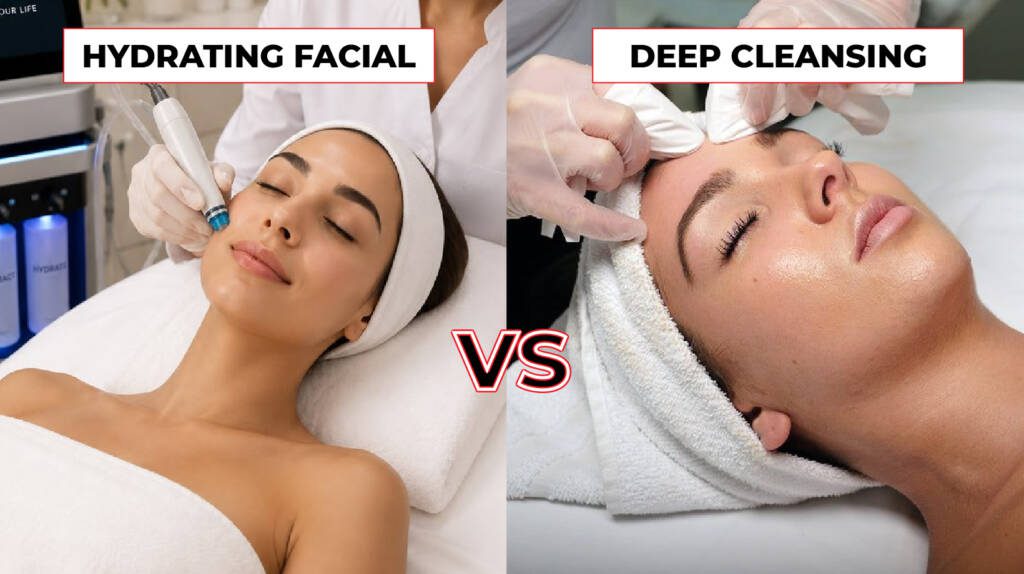
Walk into any clinic and you will likely see both hydrating facials and deep cleansing facials on the menu. They sound similar, and both leave your skin looking better, but they work in very different ways and suit different skin needs. Choosing the right one comes down to understanding what your skin actually needs, whether that is a moisture boost or a thorough pore clear-out.
This guide breaks down the difference between a hydrating facial and a deep cleansing facial, so you can pick the facial treatment that suits your skin best.
Why the Right Facial Matters
No two complexions are the same. Your skin type, concerns, and even the season all influence which facial treatment will help most. Picking the wrong one is rarely harmful, but it may leave you underwhelmed, for example, choosing a hydration boost when your real concern is congestion.
According to the American Academy of Dermatology, the right care depends on whether your skin tends to be dry or oily, and striking the right balance between oil control and hydration is key. The same logic applies when choosing a professional treatment. With that in mind, here is how the two compare.
What Is a Deep Cleansing Facial?
A deep cleansing facial is designed to clean far beyond what your daily routine can manage. While washing at home removes surface dirt, oil, dead skin, and debris can stay trapped inside the pores. A deep cleansing facial clears that buildup through a thorough, multi step process.
A typical deep cleansing facial includes:
- Cleansing to remove surface oil and makeup
- Steam to soften the skin and open the pores
- Exfoliation to clear away dead skin cells
- Extraction to remove blackheads and congestion
- A soothing mask and lightweight finish
The main benefits of this facial treatment are clearer pores, reduced blackheads, and a smoother, fresher looking surface. It suits oily, congested, and acne prone skin especially well. If you regularly notice blackheads, shine soon after cleansing, or a bumpy, uneven texture, a deep cleansing facial is usually the better fit. To support clearer skin at home, the right oily skin products help keep pores from becoming congested between sessions, and you can read more about which facial treatments help oily skin if this sounds like your main concern.
What Is a Hydrating Facial?
A hydrating facial focuses on restoring moisture rather than clearing pores. Think of it like watering a dry plant. When your skin lacks moisture, it can look flaky, feel tight, and appear dull. This facial treatment replenishes hydration to leave the skin soft, plump, and glowing.
A typical hydrating facial includes:
- Gentle cleansing to prepare the skin
- Hydrating serums rich in ingredients like hyaluronic acid
- Nourishing masks to lock in moisture
- A focus on strengthening the skin barrier
The main benefits are deep hydration, reduced flakiness, and a long lasting, healthy glow. A hydrating facial suits dry, dehydrated, sensitive, and mature skin, as well as anyone whose skin feels stripped by harsh weather or air conditioning. If your skin feels tight, looks dull, or flakes easily, this is usually the better choice. Supporting it with suitable dry skin products helps maintain that hydration at home.
Hydrating Facial vs Deep Cleansing: The Key Differences
While both improve your skin, the core difference comes down to purpose. Here is how they compare at a glance:
- Main goal: Deep cleansing focuses on clearing pores and oil, while hydrating focuses on restoring moisture.
- Best for: Deep cleansing suits oily and congested skin, while hydrating suits dry and dehydrated skin.
- Key step: Deep cleansing relies on exfoliation and extraction, while hydrating relies on serums and moisture rich masks.
- The result: Deep cleansing leaves skin clearer and more refined, while hydrating leaves it soft, plump, and glowing.
Neither facial treatment is universally better. The right one depends entirely on what your skin needs at the time.
Which One Should You Choose?
Deciding between the two is easier when you focus on your main concern:
- Choose a deep cleansing facial if your skin feels oily, looks congested, or you regularly get blackheads and breakouts.
- Choose a hydrating facial if your skin feels dry, tight, or dull and needs a moisture boost.
- Consider alternating both if your skin shifts between oily and dry, or with the seasons.
Interestingly, even oily skin can benefit from hydration if it is dehydrated, since lightweight moisture can help balance oil production. This is why a professional assessment is so useful. A practitioner can look at your skin and recommend the right facial treatment rather than leaving you to guess. You can explore both options within MyClinic’s range of professional facial treatments.
How MyClinic Can Help
Not sure which facial your skin actually needs? MyClinic takes the guesswork out of it with a proper skin assessment before every session, so you are matched to a deep cleansing facial, a hydrating facial, or a combination of both based on what your skin is showing, not just what sounds appealing on the menu. This means your sessions are working toward your actual skin goals, whether that is clearer pores, a stronger moisture barrier, or a healthier balance between the two.
How Often Should You Get a Facial?
For most people, a facial every 4 weeks is a good rhythm for balanced, healthy skin. Oily and congested skin may benefit from more frequent deep cleansing, while dry skin often needs regular hydration to stay comfortable. A practitioner can recommend a schedule based on your skin type and goals.
Frequently Asked Questions
1. Can oily skin have a hydrating facial?
Yes. Oily skin can still be dehydrated, and lightweight, non comedogenic hydration can actually help balance oil production and improve texture.
2. Will a deep cleansing facial dry out my skin?
A professional deep cleansing facial should not leave your skin overly dry. It clears excess oil and debris, then soothes and hydrates afterward to keep the skin balanced.
3. How do I know which one I need?
If your skin feels oily or congested, choose deep cleansing. If it feels dry, tight, or dull, choose hydrating. A consultation can confirm the best fit.
4. How often should I get these facials?
Around every 4 weeks works well for most people. Your ideal frequency depends on your skin type and concerns.
5. Can I alternate between the two?
Yes. Many people alternate them to keep skin both clear and hydrated, especially as their skin changes with the seasons.
Conclusion
A hydrating facial and a deep cleansing facial both leave your skin looking and feeling better, but they solve different problems. Deep cleansing clears congestion and excess oil, making it ideal for oily, blackhead prone skin, while hydrating restores moisture for dry, dull, or tight skin. Knowing which facial treatment matches your skin’s current needs is the key to getting the most from your session.
If you are unsure which facial suits your skin, the experienced team at MyClinic can help. Contact us to book a consultation and take the first step toward a fresher, healthier complexion.