Introduction
Uneven skin tone is one of the most common concerns for people in Asia seeing that our skin tends to have more active pigment cells. This made us prone to experience discoloration that can appear as spots or patches across the skin. Two of the most frequently confused concerns are dark spots and melasma. They may look similar at a glance, but they have different causes and respond to different treatments, so telling them apart matters.
This guide explains how to recognise dark spots on skin versus melasma, why Asian skin is more vulnerable, and what your options are for clearer, more even-toned skin.
Why Asian Skin Is More Prone to Pigmentation?
Asian skin generally contains more melanin; which is the pigment that gives skin its colour. While this offers some natural protection from the sun, it also means the pigment cells react more easily to triggers like UV exposure, inflammation, and hormonal changes. The result is that discolouration appears more readily and can take longer to fade.
This higher reactivity is also why aggressive treatments can sometimes backfire on Asian skin, triggering further pigmentation. Choosing the right approach for your specific concern is therefore essential.
What Are Dark Spots on the Skin?
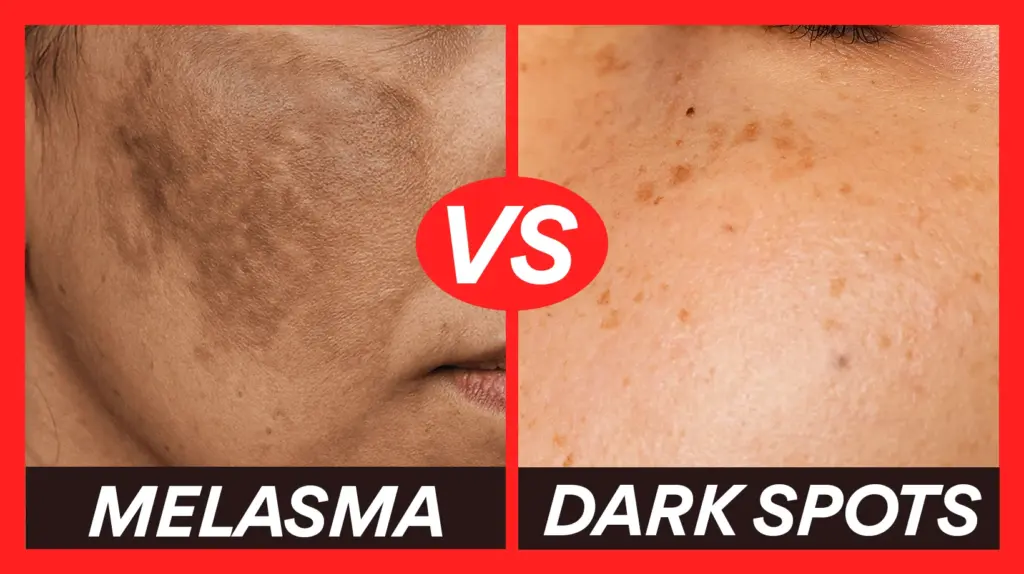
Dark spots on skin, often called hyperpigmentation, are areas that become darker than the surrounding skin because of excess melanin in one spot. They are usually well-defined and isolated rather than spread across large areas. Common causes include:
- Sun exposure and accumulated UV damage
- Post-inflammatory hyperpigmentation left behind by acne
- Skin injuries such as cuts, burns, or irritation
- The natural ageing process
Dark spots on skin tend to appear as individual brown or black marks, age spots, or the lingering shadows that remain after a breakout has healed. Since each spot can usually be traced back to a specific cause such as sun damage, acne, or a skin injury, dark spots on skin frequently respond well to targeted brightening treatments.
What Is Melasma?
Melasma is a specific type of pigmentation that usually appears as larger, symmetrical patches rather than isolated spots. It is strongly influenced by hormones and sun exposure, which is why it is sometimes called the “mask of pregnancy.”
According to the American Academy of Dermatology, melasma typically shows up as tan, brown, or grayish brown patches on the cheeks, forehead, chin, and upper lip, and treating it is one of the most common reasons people with darker skin tones see a dermatologist. Key features of melasma include:
- Symmetrical patches on both sides of the face
- A blotchy, patchy appearance rather than distinct spots
- Strong links to hormonal changes such as pregnancy or contraceptive use
- A tendency to be persistent and to relapse
Dark Spots vs Melasma: How to Tell the Difference
While both involve excess pigment, a few clues help distinguish them:
Dark Spots | Melasma | |
Shape | Small and well-defined | Broader, blotchy patches |
Symmetry | Usually appears randomly | Typically symmetrical on both sides of the face |
Triggers | Sun damage, acne, or skin injury | Hormonal changes such as pregnancy or contraceptive use |
Persistence | Often fades with consistent treatment | More stubborn and prone to returning, even after treatment |
That said, the two can overlap, and self-diagnosis is not always reliable. A professional assessment is the safest way to confirm which concern you are dealing with, especially on Asian skin where the wrong treatment can worsen pigmentation. The team behind MyClinic’s pigmentation and melasma treatments can help identify your specific condition, allowing us to offer a personalised treatment plan suitable for you.
Treatment Options Available at MyClinic for Dark Spots and Melasma
The right plan depends on whether you are treating isolated dark spots on skin or more widespread melasma. Common professional options include:
- Laser treatments, which target excess pigment and can be tailored to suit Asian skin
- Laser toning, a gentler approach often used for melasma-prone skin
- Chemical exfoliation, which helps fade surface discolouration over time
- Topical brightening agents prescribed to regulate pigment production
Because melasma is hormone-driven and persistent, it usually needs ongoing management rather than a one-off fix. Dark spots on skin from sun or acne often fade more quickly with consistent treatment. For those wanting an overall more luminous complexion, we offer whitening and brightening treatments that can complement targeted pigmentation care.
How to Prevent Pigmentation From Worsening?
Whichever concern you have, prevention is key, since sun exposure is the single biggest trigger for both. To protect your skin:
- Wear broad-spectrum sunscreen every day, even indoors near windows
- Reapply sunscreen regularly when outdoors
- Use hats and seek shade during peak sun hours
- Avoid picking at acne, which can leave dark marks
- Be gentle with your skin and avoid harsh scrubbing
Consistent sun protection not only prevents new dark spots on skin but also stops existing pigmentation from deepening. For complex or persistent cases, a dermatology assessment ensures your treatment is matched to your skin type.
Frequently Asked Questions
1. Can dark spots on skin turn into melasma?
No. Dark spots and melasma are different conditions. However, you can have both at the same time, which is one reason a professional diagnosis is helpful.
2. Is melasma harder to treat than dark spots?
Generally, yes. Melasma is hormone-driven and tends to be persistent and recurring, so it usually requires ongoing management rather than a single treatment.
3. Are pigmentation treatments safe for Asian skin?
When tailored correctly, yes. Asian skin needs careful treatment selection to avoid triggering further pigmentation, which is why a professional assessment matters.
4. Will sunscreen really help with dark spots on skin?
Absolutely. Daily sun protection is one of the most effective ways to prevent new dark spots and stop existing pigmentation from getting darker.
5. How long does it take to see results?
This varies by condition and treatment. Dark spots often fade faster, while melasma may need a longer, consistent plan to manage effectively.
Conclusion
Telling the difference between dark spots on skin and melasma is the first step toward treating them effectively, especially on Asian skin that is naturally more prone to pigmentation. Dark spots tend to be isolated and trigger-related, while melasma appears as stubborn, symmetrical patches tied to hormones. With the right diagnosis, sun protection, and a tailored treatment plan, both can be managed for a clearer, more even complexion.
If you are unsure regarding which concern you have, the experienced team at MyClinic can help. Contact us today to book a consultation and take the first step towards a brighter and healthier-looking skin.